How Condensing Boilers Work on Industrial Sites
A condensing boiler is a high efficiency boiler that recovers latent heat from flue gas. It cools the exhaust below the water dew point, turns vapour into liquid, and sends that recovered heat back to system water. This guide explains how condensing boilers work and when they suit an industrial or commercial site.
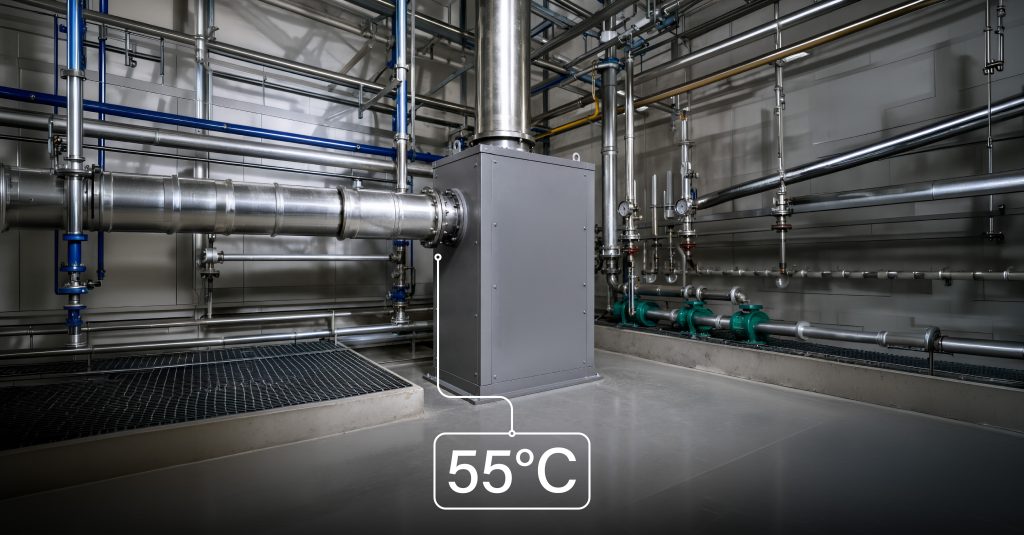
On natural gas, the flue gas dew point sits near 55°C. Cool the heat exchanger surface below 55°C and the boiler recovers energy a conventional boiler sends up the stack. Hold the surface above 55°C and no condensing occurs.
Condensing is a condition, not a badge. A condensing boiler running on 75°C return water is just an expensive non-condensing boiler.
This guide covers the mechanism, the return temperature rule, what the efficiency figures really mean, and where condensing technology belongs on an Australian industrial or commercial site. For saturated steam plant, a condensing boiler is the wrong answer, and a condensing heat saver is the right one.
What a condensing boiler is
A condensing boiler is a high efficiency boiler fitted with a secondary heat exchanger, or an extended primary surface, that cools flue gas below the water dew point. Vapour in the exhaust then condenses and releases latent heat into the returning system water.
Three parts define the design:
First, the primary heat exchanger takes sensible heat straight from the flame, as in any boiler.
Second, the secondary heat exchanger sits at the cool end of the gas path and takes the coldest water in the circuit, the return. Condensation happens on that surface.
Third, the condensate drain removes the liquid that forms, which is acidic.
Everything else follows. Materials change because acidic condensate corrodes carbon steel. Flue construction changes because the exhaust runs cool and wet. Control strategy changes because a condensing boiler earns more at part load than at full load, which is the opposite of what many operators expect from conventional plant.
How latent heat recovery works
Burning natural gas makes carbon dioxide and water. Water leaves the flame as vapour, and turning water to vapour uses about 2,260 kJ/kg at atmospheric pressure. In a conventional boiler, that energy leaves through the flue at 180°C to 250°C and is not recovered.
A condensing boiler reverses that phase change. When flue gas cools below the dew point, the vapour condenses back to liquid and gives up the latent heat taken in during combustion. That heat then moves into the return water before the water goes back to the primary circuit.
For natural gas, latent heat is about 11% of the fuel’s gross calorific value. Recover most of that 11% and stack temperature falls to about 40°C to 60°C instead of 200°C. O’Brien Energy uses the same idea with a boiler heat saver on the stack of larger plant. Only the surface that captures the heat changes.
The return temperature condition
Return water temperature is the single thing that decides whether a condensing boiler condenses. Not flow temperature. Not burner output. Not the badge on the casing.
The secondary heat exchanger is cooled by water returning from the system. If return water is hotter than the flue gas dew point, the exchanger surface never falls below dew point, no condensate forms, and latent heat stays in the exhaust. Typical dew points at normal excess air are near 55°C on natural gas, a little lower on LPG, and lower again on distillate, which brings a separate sulphuric acid dew point issue.
In practice, three bands describe the result. Above about 55°C return, there is no condensing gain and the capital premium buys little. Between 40°C and 55°C, condensing starts and improves as return temperature falls. Below 40°C, the boiler condenses hard and efficiency moves close to the quoted ceiling.
Why circuit design outranks boiler selection
Circuit design is the set of hydraulic and control choices that decide what temperature water returns to the boiler. A condensing boiler installed on an old 82/71°C circuit with three-port mixing valves and constant-temperature primary flow will not condense in normal use. The boiler is fine. The hydraulics are not.
Three design moves unlock the efficiency a datasheet promises. First, widen the design temperature difference so return water arrives colder. Second, remove injection circuits and bypasses that raise return temperature by design. Third, use weather compensation so flow temperature tracks demand instead of sitting at a fixed setpoint.
For example, a circuit designed around 80/60°C and trimmed down through shoulder seasons spends most of the year below 55°C return, so it condenses for most operating hours. The same emitters held at a fixed 82°C flow condense for almost none. Same boiler, same fuel, different result.
Real efficiency gains and their limits
Efficiency numbers for condensing boilers appear on two bases, and the gap is large enough to change a business case.
Gross calorific value, also called higher heating value, counts total energy in the fuel, including latent heat in the water vapour. Efficiency on a gross basis cannot go above 100%. Net calorific value leaves latent heat out of the total, which is why condensing boilers are often quoted above 100% on a net basis. No law of physics breaks. The measuring rule just changes.
Check which base a quoted number uses before comparing two boilers. According to O’Brien Energy product information, the condensing hot water range reaches up to 97% efficiency under favourable return conditions.
Seasonal performance is narrower than any headline figure. A well-kept conventional boiler runs in the low to mid 80s gross across a year, against low to mid 90s for a condensing boiler on a low-temperature circuit. On a circuit that never drops below 70°C return, the gap shrinks to a couple of points. In practice, two identical boilers on two sites can differ by ten percentage points across a year, and the variable is the site design, not the boiler.
Condensing vs non-condensing boiler
A condensing boiler recovers sensible and latent heat. A non-condensing boiler recovers sensible heat only and vents the rest. One heat exchanger separates the two designs, and the effects run through the whole installation.
Flue gas temperature is the visible difference. Condensing plant exhausts at about 40°C to 60°C, while conventional plant runs at about 180°C to 250°C. The gap is recovered energy, and you can measure it with a stack thermometer.
Materials are the second difference. Condensate from natural gas combustion is acidic, usually pH 3 to 5, so condensing heat exchangers are built in stainless steel or aluminium alloy. O’Brien Energy uses the same build across the condensing range. Carbon steel exposed to steady condensation corrodes and fails early, which is why conventional boilers use anti-condensate design features.
Flue, drainage and condensate handling
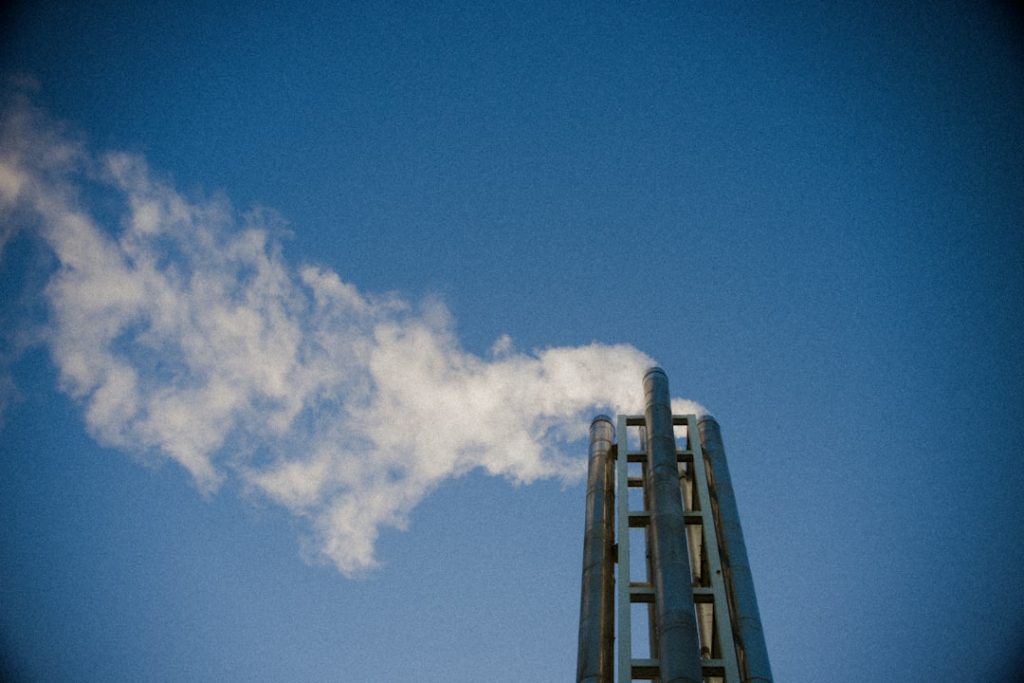
Condensing plant needs a corrosion-resistant, fully sealed flue laid to fall, with a drain point at the low spot. A cool wet flue also makes a visible plume, which matters where the terminal sits near a boundary, a walkway or a fresh air intake.
Drainage is the most common retrofit failure. Boiler condensate is the acidic liquid a condensing boiler produces, measuring about pH 3 to 5 and running nonstop at high output. The drain needs continuous fall, a trap sized to hold against flue pressure, and protection against freezing. Many Australian water authorities set a minimum discharge pH for trade waste, so a neutraliser cartridge usually sits between boiler and sewer. Confirm the local rule during design.
Servicing changes too. Condensing heat exchangers foul on the flue side and need wash-down, not brush cleaning. Build the extra work into the boiler maintenance schedule from commissioning.
Where non-condensing plant still wins
A non-condensing boiler is a boiler which recovers sensible heat only, and it remains the better engineering answer in three cases. First, high-temperature process circuits where return water never approaches dew point, such as thermal fluid duties and high-pressure hot water loops. Second, sites with no available drainage path, where the cost of making one outweighs the fuel saving. Third, duties where a standard stack heat saver recovers sensible heat more cheaply than a condensing boiler recovers latent heat.
On all three, a conventional boiler paired with a heat saver can give a shorter payback than a condensing boiler running outside the condensing band. In practice, the choice is settled by a week of logged return temperatures, not by a datasheet. O’Brien Energy supplies both paths, which is why site review should come before equipment choice, not after it.
Steam plant is a different problem
Most Australian industrial heat is steam, and steam is where the generic condensing article stops being useful.
A saturated steam boiler cannot condense its own flue gas. Feedwater in the deaerator usually sits between 85°C and 105°C, well above the flue gas dew point, so no cold surface exists to condense against. Specifying a condensing boiler for a steam duty is a category error, not a sizing mistake.
Steam sites recover the same energy through three other devices. A standard heat saver preheats feedwater with sensible heat only and stays above dew point to protect the tubes. According to O’Brien Energy, a stack heat saver can improve overall boiler efficiency by up to 10%, which is 10% off the annual fuel bill. A condensing heat saver goes further. Blowdown heat recovery captures a third stream entirely.
Which cool stream does the site actually have
A condensing heat saver is a stack-mounted heat recovery unit that moves latent heat into a cool liquid stream. It only works when the site really has one: cold makeup water, wash water, or a process preheat duty below about 50°C. O’Brien Energy builds the unit with 316 stainless steel tube cores, aluminium-fused fins and a stainless internal gas bypass for stack corrosion control.
Blowdown heat recovery works in a different way again. It transfers heat from continuous surface blowdown into incoming makeup water while holding total dissolved solids at target.
So the selection question on a steam site is never condensing or not. The question is which cool stream exists, and which surface moves heat into that stream most cheaply. Answering that needs a stack temperature reading, a flue gas analysis and a water balance, which is an engineering and consulting task, not a brochure comparison.
Which Australian sites suit condensing
A suitable condensing site is a site where four conditions line up: a hot water duty, a low return temperature, a steady load, and a drainage path for condensate.
First, the duty is hot water rather than saturated steam. Commercial hot water boilers are the natural home for the technology, and steam duties use the heat saver options above. Second, the circuit runs below 55°C return, or can be changed to do so. Third, the load is steady, because long operating hours turn percentage points into dollars. Fourth, a trapped drain exists, plus confirmation of the local water authority position on trade waste discharge pH.
Healthcare, food and beverage, aged care, education campuses and multi-residential plant rooms fit the profile most often. Heavy process manufacturing usually does not, at least not on the main steam header, though it often does on the makeup water circuit feeding that header.
Where O’Brien Energy fits
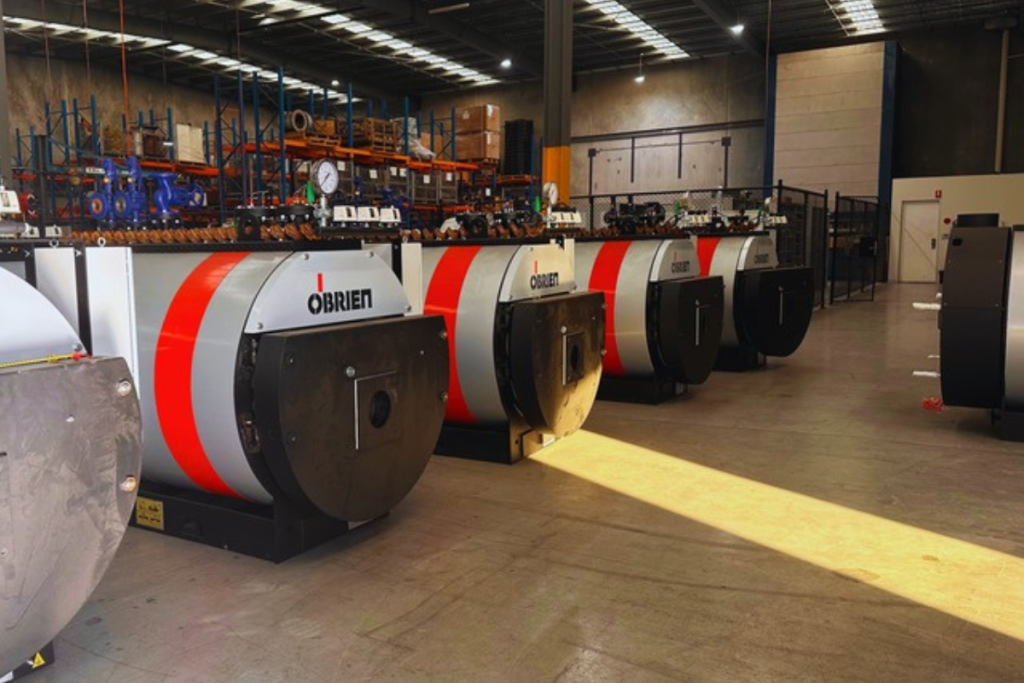
O’Brien Energy is an Australian boiler engineering company that supplies, installs, services and rents industrial boilers nationwide, from offices in Sunshine West VIC, Prestons NSW, Parkinson QLD and Malaga WA. O’Brien Energy is Australia’s largest privately owned boiler company, with more than 20 years of operation, over 40,000 jobs completed and about 350 years of combined staff experience.
The condensing offer covers both paths described above. The OBYCON condensing hot water range covers commercial and industrial hot water duties and delivers efficiencies of up to 97 per cent on natural gas. Its construction is designed to manage the acidic condensate produced during the condensing process. Single-stage and condensing heat savers cover steam boilers and larger hot water plant, where flue gas heat recovery is added to existing equipment. Blowdown heat recovery, O2 trim and variable speed drive combustion control cover nearby gains, and several pay back faster than condensing itself.
Engineering, service and operator skill
AS 2593 is the Australian Standard that governs unattended boiler operation. Systems are supplied and maintained per AS 2593 where unattended operation applies, backed by 24/7 nationwide breakdown response and in-house parts, including custom gasket manufacture.
O’Brien Energy also operates as a registered training organisation, RTO #45484, delivering High Risk Work Licence and unattended boiler training. Operator skill matters here, because a condensing installation keeps its efficiency only when operators understand what return temperature is doing to the plant, and why a setpoint lifted by 10°C for comfort can wipe out the whole gain.
For a worked example, the Tabro Meat boiler upgrade installed a 5,000 kW system where system design, not equipment choice alone, drove the result. Named client references across food processing and healthcare include CSF Proteins, Scalzo Foods and Western District Health Service.
Frequently asked questions
What is a condensing boiler?
A condensing boiler is a boiler that cools flue gas below the water dew point, about 55°C on natural gas, so vapour in the exhaust condenses and gives latent heat back to the return water. A conventional boiler vents the same energy at about 180°C to 250°C.
Recovery is worth about 11% of the fuel’s gross calorific value, but only when return water temperature is low enough to capture the heat. Three parts make the design work: a primary heat exchanger that takes sensible heat from the flame, a secondary heat exchanger cooled by return water where condensation forms, and a drain that removes the acidic condensate.
Condensing boilers suit hot water duties. Saturated steam plant cannot use the design, because feedwater temperature sits above the flue gas dew point. Steam sites use a stack heat saver instead.
How does a condensing boiler work?
Flue gas passes through a secondary heat exchanger cooled by the coldest water in the system, the return. When the exchanger surface sits below the flue gas dew point, vapour condenses on the surface and gives up latent heat, which moves into the return water before the water goes back to the primary circuit. Liquid condensate drains away through a trap.
Stack temperature falls from about 200°C to about 40°C to 60°C, and that drop is the recovered energy made measurable.
For example, a boiler serving a weather-compensated heating circuit condenses through most of autumn and spring, when return water sits well under 55°C, then stops condensing during the coldest week of the year, when flow and return temperatures rise to meet peak demand. Efficiency therefore changes hour by hour with circuit conditions rather than staying fixed at the datasheet number.
What is the best temperature for a condensing boiler?
Return water below 55°C is the threshold for any condensing at all on natural gas. Below 40°C return is where a condensing boiler reaches the quoted efficiency ceiling. Between 40°C and 55°C, condensing happens and improves steadily as return temperature falls.
Flow temperature matters much less than return temperature. A boiler running 80°C flow with 45°C return condenses well. A boiler running 70°C flow with 65°C return barely condenses at all.
Three control moves beat any brand choice. First, weather compensation, so flow temperature tracks demand instead of a fixed setpoint. Second, a wide design temperature difference, so return water arrives colder. Third, removal of mixing and injection circuits that raise return temperature by design. In practice, hydraulics and controls decide the result, not the boiler nameplate.
How much more efficient is a condensing boiler?
On a well-designed low-temperature circuit, a condensing boiler runs in the low to mid 90s on a gross calorific value basis, against low to mid 80s for a well-kept conventional boiler. The gap is worth about 10 percentage points of annual fuel spend.
On a circuit staying above 70°C return, the same gap shrinks to a couple of points and the business case weakens.
Always check the measurement base. Gross calorific value includes latent heat in the water vapour and caps efficiency at 100%. Net calorific value leaves latent heat out of the total, which is why condensing boilers can appear above 100% on some datasheets. According to O’Brien Energy product information, the condensing hot water range reaches up to 97% under favourable return conditions. In practice, seasonal performance depends more on sizing and circuit design than on the headline figure.
What is the difference between condensing and non-condensing boilers?
A condensing boiler recovers sensible and latent heat and exhausts at about 40°C to 60°C. A non-condensing boiler recovers sensible heat only and exhausts at about 180°C to 250°C.
Three practical differences follow. First, materials: condensing heat exchangers use stainless steel or aluminium alloy, because condensate measures pH 3 to 5 and corrodes carbon steel. Second, flue: condensing plant needs a sealed corrosion-resistant flue laid to fall, and it makes a visible plume. Third, drainage: condensing plant needs a permanent trapped condensate drain, which older plant rooms often lack.
Non-condensing plant remains correct on high-temperature process circuits with no cold return available, and on sites without a drainage path. On those duties a conventional boiler with a standard stack heat saver is the better engineering answer.
Is boiler condensate harmful?
Boiler condensate is a mildly acidic liquid, usually pH 3 to 5, close to household vinegar. With normal care, handling condensate is not a hazard to operators.
Materials are the real issue. Condensate corrodes carbon steel, copper and concrete over time, which is why condensing heat exchangers use stainless steel or aluminium alloy, and why condensing flues use corrosion-resistant liners rather than the masonry or mild steel used on conventional plant. O’Brien Energy specifies stainless steel or aluminium construction across the condensing range for that reason.
Discharge is the compliance issue. Many Australian water authorities set a minimum pH for trade waste, so a neutraliser cartridge or limestone chip vessel usually sits between the boiler and the sewer connection. Confirm the requirement with the local authority during design. In practice, adding neutralisation during the build costs much less than fitting it later.
Can a condensing boiler be fitted to a steam system?
No. A saturated steam boiler holds feedwater between 85°C and 105°C in the deaerator, above the flue gas dew point, so no cold surface exists to condense against. Fitting condensing hot water equipment to a steam duty is a category error.
Steam sites recover equivalent energy three other ways. A standard stack heat saver preheats feedwater with sensible heat, which according to O’Brien Energy can improve overall boiler efficiency by up to 10%. A condensing heat saver recovers latent heat as well, but only where a cool liquid stream below about 50°C exists, such as cold makeup water or wash water. Blowdown heat recovery captures heat from continuous surface blowdown while holding total dissolved solids at target.
Selecting between the three starts with a stack temperature reading and a site water balance.
Can an existing boiler be replaced with a condensing boiler?
Yes, and retrofit is the right move on many Australian sites. Replacing a conventional boiler with a condensing unit rarely delivers the brochure gain on its own, because the circuit around the boiler decides the result.
Four checks come first. Check 1: log return temperature under real load across a full week before specifying anything. Check 2: audit hydraulic separation and mixing, because injection circuits, bypasses and constant-flow primaries all raise return temperature by design and are the usual reason a new condensing boiler underperforms. Check 3: inspect flue condition and route, because masonry or single-skin steel is not suitable for wet cool exhaust. Check 4: confirm drain availability, which is the check that most often changes project cost.
Retrofit is an engineering task across the whole system, not a like-for-like swap of one box for another.
Getting the specification right
A failed condensing project is almost always a design failure, not an equipment failure. The problems sit in return temperatures nobody logged, flues never designed for wet exhaust, drains that do not exist, and steam duties given hot water equipment.
Four numbers decide a condensing project. Number 1: measured return water temperature across a full week of real load. Number 2: stack temperature on the existing plant. Number 3: annual fuel spend, which sets the value of every recovered percentage point. Number 4: available drainage and the local trade waste pH limit.
Not just installed. Engineered.
In practice, each of the four is cheaper to measure before purchase than after commissioning.
Talk to O’Brien Energy about whether condensing suits the site. The team reviews actual return temperatures, flue route, drainage and load profile before recommending equipment, across hot water plant, steam plant and heat saver retrofits nationwide. Request a quote or call 1300 771 759.